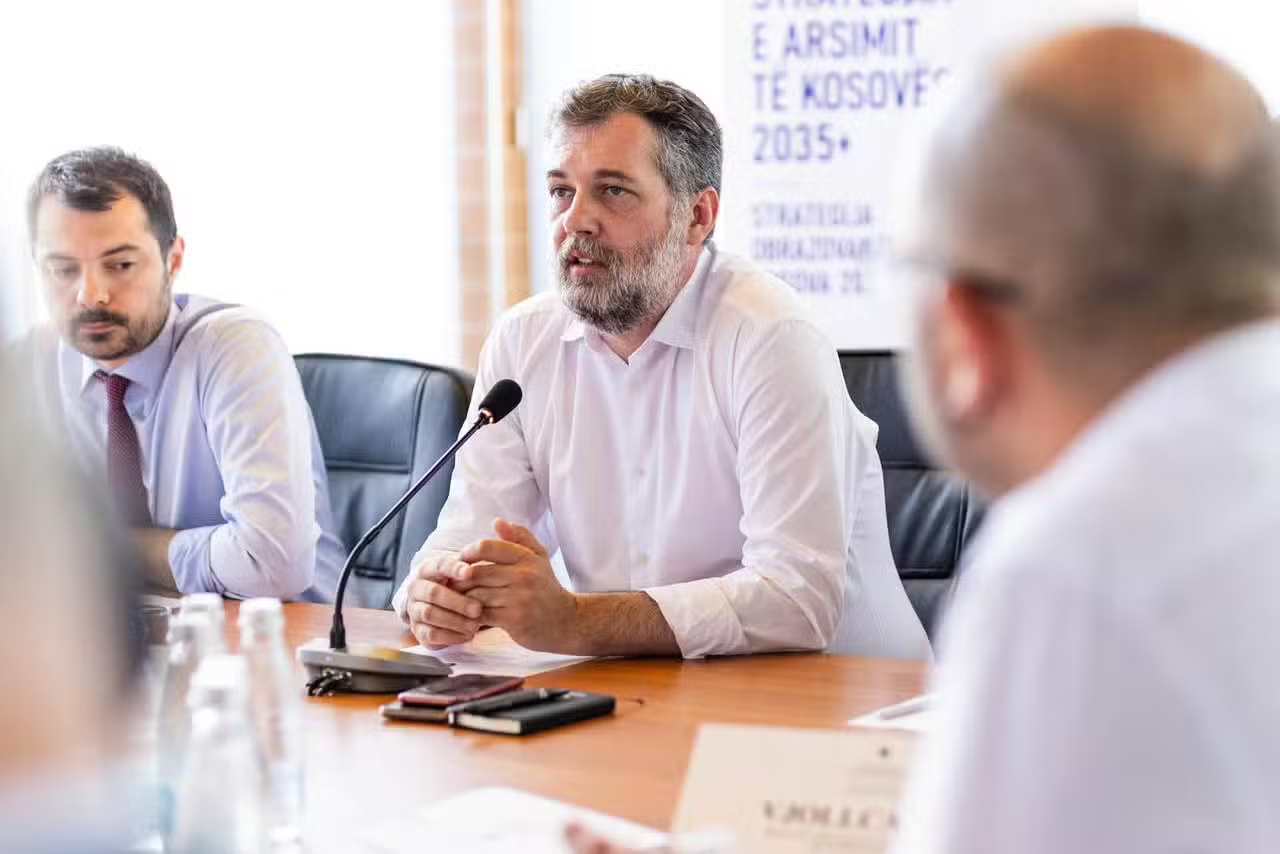
The Ministry of Education and Science organized the first roundtable discussion with development partners in the field of education, within the framework of drafting the new Education Strategy of Kosovo 2035+. The meeting aimed to inform development partners about the methodological approach and the drafting process of the new Strategy, which will define the strategic priorities guiding the development of the education sector in the coming decade.
In his remarks, the Acting Minister of Education and Science, Hajrulla Çeku, expressed gratitude for the continuous support of development partners in the field of education. He emphasized that achievements in the education system are, among other things, the result of their long-standing contribution, and added that the drafting of the new Strategy represents an opportunity to deepen partnerships—not only in preparing the document but also in its implementation.
Minister Çeku stated that the new Strategy will be drafted through an inclusive and consultative process, involving institutions, development partners, experts, civil society organizations, local authorities, professionals, and other relevant stakeholders. He outlined four main priorities on which the long-term strategic approach in education will be based: early education and prevention, improvement of pre-university education through the development of full-day schooling, strengthening vocational education and training in line with labor market needs, and restructuring higher education.
The coordinator of the drafting process, Taulant Hoxha, presented the methodological framework, management structure, and key timelines of the process. He highlighted that the Education Strategy 2022–2026 created an important foundation for advancing reforms in the education sector, marking progress in priority areas, while the new Strategy aims to build upon existing achievements and establish a long-term developmental framework that responds to societal needs and the challenges of the next decade. He also emphasized the approach of enhanced local and institutional ownership in drafting and implementing the new Strategy, as a pillar upon which future international support will be o The coordinator of the drafting process, Taulant Hoxha, presented the methodological framework, management structure, and key timelines of the process. He highlighted that the Education Strategy 2022–2026 created an important foundation for advancing reforms in the education sector, marking progress in priority areas, while the new Strategy aims to build upon existing achievements and establish a long-term developmental framework that responds to societal needs and the challenges of the next decade. He also emphasized the approach of enhanced local and institutional ownership in drafting and implementing the new Strategy, as a pillar upon which future international support will be oriented.
The meeting was attended by senior representatives of Kosovo’s key development partners, including the European Union, the World Bank, the German Agency for International Cooperation (GIZ), the Austrian Development Agency (ADA), the Luxembourg Development Cooperation Agency (LuxDev), the OSCE, the United Nations Development Programme (UNDP), the United Nations Children’s Fund (UNICEF), the United Nations Office for Project Services (UNOPS), Millennium Challenge Account (MCA), DVV International, as well as the KosEd and Swisscontact projects. All development partners expressed their readiness to continue supporting the Ministry of Education and Science throughout the drafting and implementation of the new Strategy. They valued the importance of a process based on previous experiences, broad consultation with stakeholders, and continuous coordination between institutions and development partners, with the aim of ensuring that the new Strategy contributes to improving quality, inclusiveness, sustainability, and competitiveness of Kosovo’s education system.
Today’s roundtable marked the official beginning of the preparation process for the new Education Strategy of Kosovo and was the first in a series of roundtable discussions with actors, stakeholders, experts, and interested parties in the field of education.